Why SEO Takes So Long (And Why That’s Not a Red Flag)
As business owners, you want to see results quickly. Waiting months to notice meaningful changes in your SEO can be frustrating, even discouraging. But here’s the honest truth: SEO is a slow-build strategy by nature. It takes steady, consistent effort over time to build authority, relevance, and trust with search engines and the people you’re trying to reach.
The payoff is sustainable organic traffic that grows month after month, bringing in qualified visitors who are actively searching for what you offer. Unlike paid ads, which stop delivering the moment you pause the budget, SEO builds a foundation that keeps working long after the initial effort. The timeline varies depending on your industry, your competition, and how much groundwork was already in place, but most businesses start to see noticeable progress within 3 to 6 months.
Patience matters here. The early months are mostly behind-the-scenes work: technical SEO fixes, content optimization, keyword research. None of that produces instant traffic spikes, but it sets the stage for growth that compounds over time.
What Is Happening in the First 90 Days of an SEO Strategy Campaign
In the first 90 days, most of the work is foundational. We audit your website’s technical health, fix crawl errors, improve site speed, and make sure search engines can understand and index your site. We also dig into keyword research to align your content with what your customers are searching for.
Content updates and new pages may go live during this window, but search engines need time to crawl, index, and evaluate those changes. It’s normal not to see immediate jumps in rankings or traffic. Think of this phase as preparing your site to compete, not as the campaign underperforming.
When Should You Start Seeing Real Organic Results
On average, the 90-day mark is when the first meaningful results show up. That might look like improved rankings for your target keywords, a steady increase in organic traffic, or early signs of stronger user engagement. For some businesses, especially in competitive markets or those starting from scratch, it can take up to six months or longer to see real movement.
The key is consistent effort and ongoing optimization. SEO success is a marathon, not a sprint, and the results that last are the ones built on steady progress.
The Useful SEO Metrics to Monitor
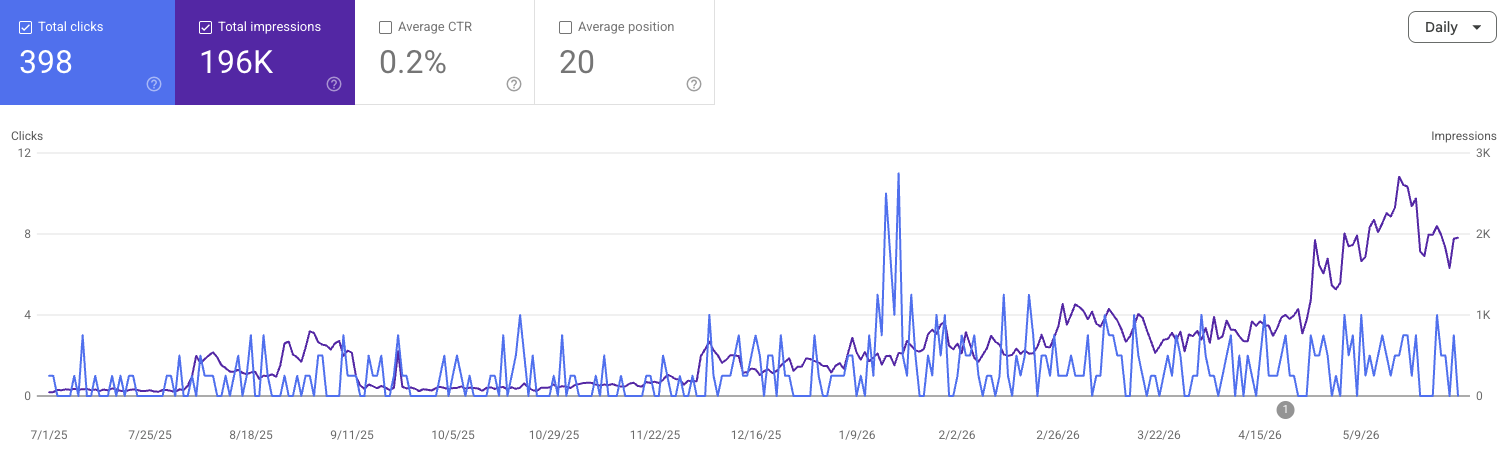
It’s easy to get lost in a sea of numbers. Not every metric is worth your attention, which is why we lean on a small set of core tools: Google Analytics 4 (GA4) and Google Search Console (GSC). Both are free tools Google provides directly, and together they cover most of what you need to track SEO performance. GA4 shows you what happens once someone lands on your site, including conversions. GSC shows you how your site performs in search itself, including impressions, clicks, and average position, and it’s also where you’ll find the URL Inspection Tool to check whether a specific page is indexed properly.
Organic Traffic Growth Beyond the Total Number
Tracking overall organic search traffic matters, but the quality of that traffic matters more. You want growth in visitors who are genuinely interested in what you offer, not just random clicks. GA4’s traffic acquisition report is useful here because it lets you compare organic search against your other website traffic sources, so you can see how much of your site’s performance is actually coming from unpaid search results. Segmenting by landing page, geography, or device helps you understand where your SEO efforts are resonating most.
Keyword Ranking Progress and Why Position Alone Is Not Enough
Ranking improvements are a good sign, but position alone doesn’t tell the full story. A keyword moving from page two to page one only matters if there’s real demand behind it, which is why keyword tracking should always be paired with search volume. Chasing a top ranking for a term nobody searches for won’t move the needle. We focus on target keywords that connect to your actual business goals, and we watch how those ranking gains translate into real visitor engagement, not just a better spot on the page.
Click-Through Rate and What It Tells You About Your Visibility
Click-through rate, or CTR, measures how often people click your listing after seeing it in Google Search. It’s a simple calculation: clicks divided by impressions. Google Search Console is where you’ll track both.
A low CTR despite decent rankings usually points to a meta title or description that isn’t matching what searchers actually want. According to Ahrefs research pulling from a study on organic CTR by position, the average top-ranking result earns a 9.28% click-through rate, and that drops to 5.82% for position two and 3.11% for position three. Even the top spot isn’t a guarantee of clicks, which is why small changes to your titles and snippets can still meaningfully shift traffic.
Conversions from Organic Traffic: The Metric That Justifies the Investment
At the end of the day, SEO should drive actions that matter to your business: form submissions, phone calls, purchases, whatever your goals are. Conversion rate is simply the number of conversions divided by unique visits, and tracking how organic visitors convert is what tells you whether the traffic you’re earning is actually worth something.
For context, most e-commerce sites converting organic traffic land somewhere between 2 and 3%, and a rate that drops well below 1% usually points to a bigger site or offer issue rather than an SEO problem. Every industry is different, so the goal isn’t hitting some universal number, it’s improving your own baseline over time.
Metrics That Look Good but Do Not Mean Much
Some metrics get a lot of attention because they sound impressive, but they don’t tell you much about actual SEO impact. We believe in transparency, so here’s what to take with a grain of salt.
Why Domain Authority Is Not a Business Metric
Domain authority scores can give you a rough sense of how your site compares to others, but they’re only a proxy, not a real ranking factor Google uses. What actually matters more is the quality of your backlinks and referring domains. A healthy site earns new referring domains over time, and links from credible, relevant sources do far more for your search rankings than a domain authority number ever will. Backlink quality matters more than backlink quantity.
Impressions Without Context Are Just Noise
Impressions tell you how often your site shows up in search results, but without clicks or conversions attached, that number doesn’t mean much on its own. High impressions paired with low clicks usually points to weak meta descriptions or a mismatch with what people are actually searching for, and it can also mean you’re missing opportunities like featured snippets.
How to Have a Better Conversation With Your SEO Agency About Results
You should feel confident and informed when discussing SEO progress. Asking the right questions cuts through jargon and keeps the conversation focused on what actually matters, especially since not every SEO agency defines these metrics the same way.
Questions Worth Asking Every Quarter
- What specific business goals is our SEO plan supporting right now?
- Which SEO tasks are prioritized, and what’s expected to move the needle next quarter?
- Which keywords are actually driving qualified traffic and conversions?
- How are we improving the experience for people once they land on the site?
- What technical issues have been fixed, and what’s still on the list, including things like broken links or indexed pages that need attention?
- How does our organic traffic compare to our other channels?
What a Good SEO Report Should Show You
A solid report highlights progress on the metrics tied to your goals. It should pull from GA4 to show on-site behavior and conversions, include organic traffic trends, keyword rankings with context (not just position numbers), technical health updates, and clear next steps. It should also help you understand engagement, meaning the percentage of sessions that last longer than 10 seconds, since that’s a much better signal than a raw traffic count. Avoid reports overloaded with vanity metrics that don’t tell you anything useful about where your business actually stands.
Signs Your SEO Campaign Is On the Right Track
A few positive performance metrics to watch for:
- Steady, month-over-month growth in organic traffic from relevant search queries
- Improved rankings for target keywords that actually matter to your business
- Growth in backlinks and referring domains from strong, relevant external sites
- Rising click-through rates on your search listings
- Longer session duration and lower bounce rate
- Growth in conversions coming specifically from organic visitors
- Fewer technical issues affecting crawlability, indexed pages, and site speed
- Content that’s clearly aligned with what your customers are actually searching for
If You Are Not Sure Whether Your SEO Is Working, Let’s Talk
If you’re uncertain about your SEO’s progress, or you just want a clearer picture of what’s happening behind the scenes, we’re here to help. At JELY Marketing, our approach to SEO is transparent, data-driven, and focused on steady growth that supports your long-term business goals. That means real reporting from the tools that matter, honest answers about what Core Web Vitals like Largest Contentful Paint and Cumulative Layout Shift mean for your site, and no vanity metrics dressed up as wins.
Request A Quote to start a conversation about how our SEO services can help you build lasting organic visibility with a partner who values transparency over hype.